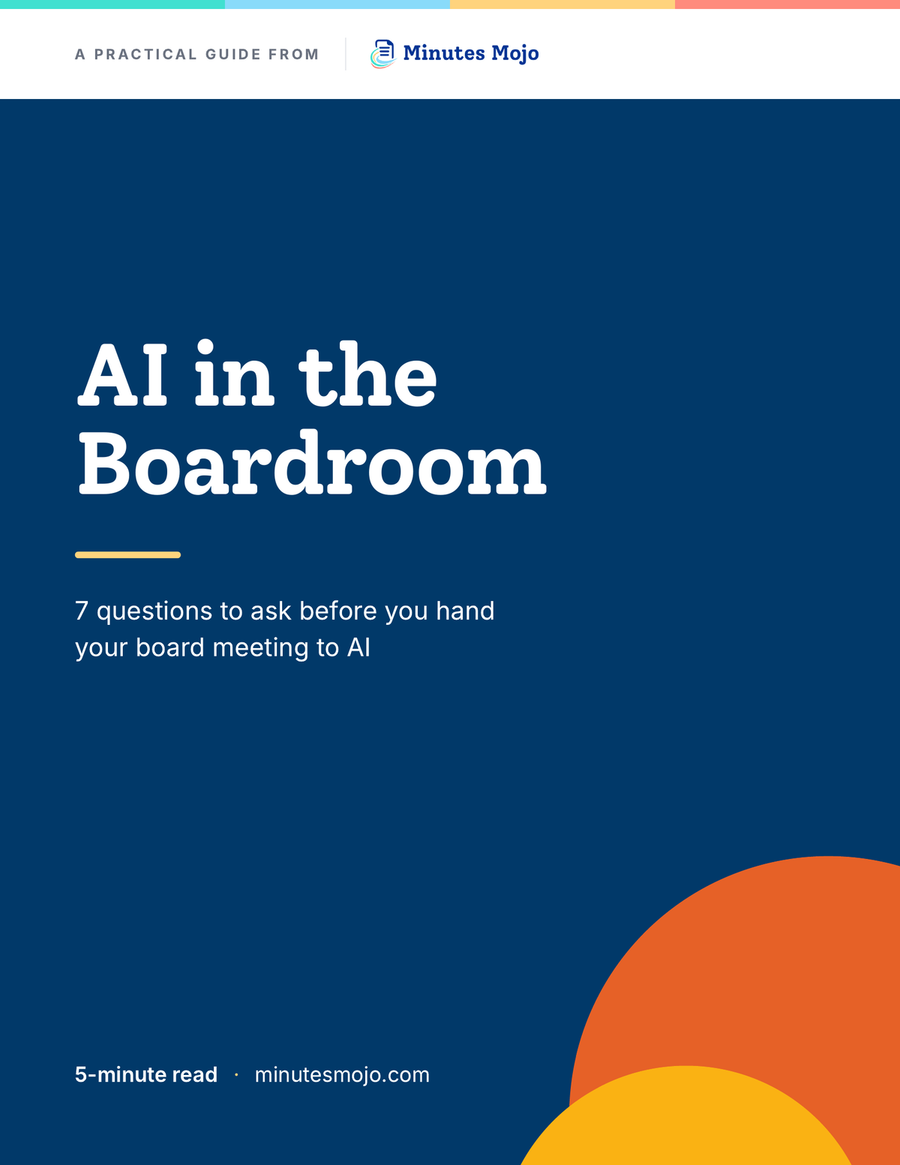
AI in the Boardroom
7 questions to ask before you hand your board meeting to AI. A free 5-minute guide from Minutes Mojo.
AI is already in your boardroom.
Someone turned on an AI notetaker at your last board meeting. Someone else pasted the transcript into ChatGPT to get a head start on the minutes. It feels like progress, and in a lot of ways it is. AI can take real work off your plate.
But board meetings are where your most sensitive conversations happen: personnel issues, financial decisions, legal questions, and confidential discussions in executive session.
Once that recording leaves the room, do you know where it goes? Who can see it? How long it’s kept? Whether it’s being used to train someone else’s AI model?
There’s a second risk. The minutes your board approves become part of your official governance record. A tidy AI summary that misses a motion, a vote, or a quorum call can cause problems that surface months or years later, usually when someone needs to know exactly what the board decided and why.
Most organizations never ask these questions until something goes wrong.
Ask the right questions first.
AI in the Boardroom is a short, practical guide for nonprofit leaders who want the time savings of AI without putting their board’s information or records at risk. In five minutes, you’ll know what to ask before you turn on a notetaker, upload a recording, or choose a tool, and where your board still needs a person in the loop.
- The question to answer before you record anything, and why the answer changes which tool you need
- Whether keeping every word ever said in your boardroom helps your board or creates risk
- Six things to check before any board recording leaves your hands
- How to tell whether an AI tool understands board work or just summarizes conversation
- A simple test for whether AI is saving your team time or shifting the work to someone else
- Where human review belongs before minutes become official
- What your board should still be able to answer years after the meeting
Who it’s for
Executive directors, board chairs, board secretaries, and the staff members who end up taking the minutes.